Long-distance relationships are hard enough. Add two different native languages, and every video call becomes a negotiation — with dictionaries, gestures, and the long silences of two people who know exactly what they feel and can’t quite say it.
Millions of couples live this way: someone moves abroad for work, a student falls in love on exchange, two travelers meet and decide to try. The whole relationship runs on video calls. And when the words don’t flow, it’s not the love that breaks first — it’s the everyday closeness. Here’s how to keep it intact.
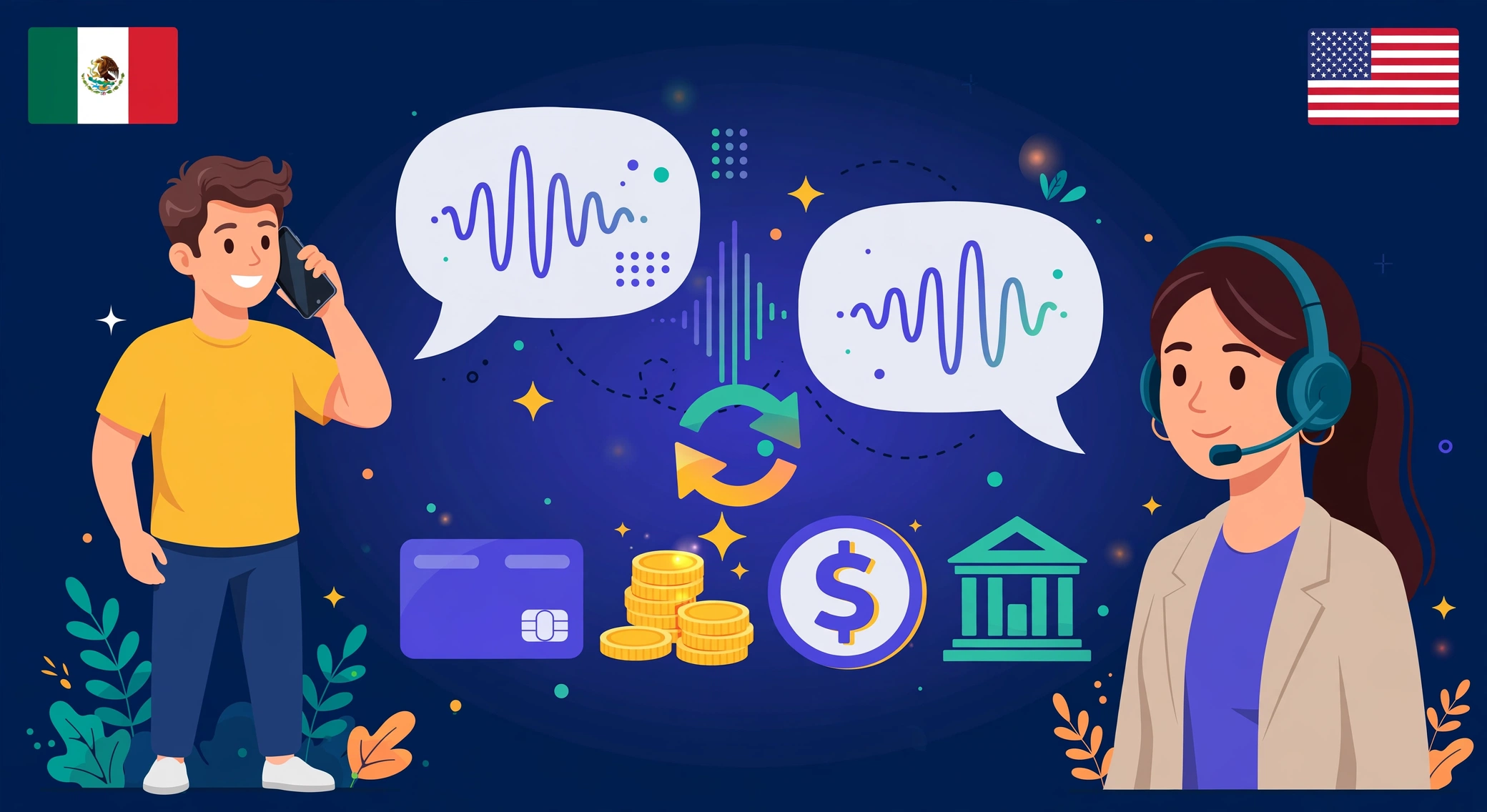
Quick Answer: You can video-call your partner across a language barrier with AI Phone’s real-time video translation. Pick your two languages in the app, share the invite link with your partner over WhatsApp or Telegram, and they tap it — no app to install on their side. You each speak your own language; AI translates both voices live, with bilingual subtitles on screen.
Why the Language Gap Hits Couples Harder Than It Should
The everyday stuff is rarely the problem. Couples find workarounds for shopping, directions, and paperwork within weeks. What wears a relationship down is that everything emotional has to travel through the weaker language: the joke that dies while it is being explained, the apology that comes out blunter than it was meant, the bad day that gets summarized in two sentences instead of actually shared. One partner ends up fluent in the relationship itself; the other is only fluent in its logistics.
That imbalance compounds. The stronger speaker gradually becomes the couple’s voice — with landlords, doctors, officials, sometimes even with the other partner’s family — while the quieter partner’s world gets smaller. It shows up in the numbers, too: a study following 316 immigrant couples in Germany and Israel found that the wider the gap between the partners’ local-language skills, the lower their relationship satisfaction fell over time — and the effect strengthened rather than faded.
None of this is a verdict, though. It is a phase, and it is front-loaded: the hardest stretch is the beginning, when the feelings are newest and the words for them are slowest. About half of people in cross-language relationships say emotional communication was harder at the start — and most of them say it eased within months. Couples rarely break because the gap is permanent. They break because the awkward phase outlasts their patience.
The takeaway is practical, not romantic: friction early on is normal, and anything that lowers that friction — a shared ritual, patience, or a tool that lets you talk properly right now — is protecting the relationship while the language catches up.
The Four Moments Where Couples Actually Get Stuck
It’s rarely the big romantic speeches that suffer. It’s these four everyday moments:
1. Daily small talk. Relationships run on boring conversation — how your day went, what you ate, the thing your coworker said. When every sentence takes ten times the effort, couples quietly stop bothering, and the distance grows in the gaps.
2. Arguments. Nuance is everything in a disagreement. In a second language you sound blunter than you mean to, jokes land wrong, and misunderstandings stack up on top of the original problem.
3. Meeting the family. The video call with her parents where you smile and nod through twenty minutes you barely understood. Being genuinely liked by the family matters in almost every culture, and you can’t charm anyone in a language you don’t speak.
4. Big plans. Visas, moving countries, money, timelines. These are the conversations that need precision, and they’re the ones where guessing is most dangerous.
What Helps Before You Reach for Technology
Let’s be honest first: no app replaces learning the language. If this relationship is long-term, both of you learning — even slowly, even badly at first — is the single best investment you can make. Couples who study together get a shared project out of it, which is its own kind of bonding.
And keep the low-tech rituals. A fixed call time you both protect. Voice messages through the day, which are easier to replay and translate than live speech. Patience with the asymmetry — one of you will always be ahead, and it flips depending on whose language you’re speaking.
But there’s a stretch — months, sometimes years — where you need a bridge right now, not after the next hundred lessons. That’s what translation is for. Not a replacement for learning. Scaffolding while you build.
Most couples just default to the app they already use — usually WhatsApp — but WhatsApp doesn’t translate video calls itself. FaceTime does offer live translation captions, though only when both of you are on Apple devices. What makes translated video calls with AI Phone different is the link: share it through the chat app you’re already using, your partner taps it and talks — no install on their side, and no shared platform required, so an iPhone and an Android can meet in the same call.
How to Set Up a Translated Video Call
Setting up a translated video call takes just a few taps:
- Open AI Phone and choose video call translation. This is separate from a regular call — it’s the mode built for two people speaking different languages.
- Pick the two languages — yours and your partner’s. It only takes a couple of taps.
- Share the invite link with your partner in WhatsApp, Telegram, or whatever chat app you already use.translating WhatsApp video calls works the same way — the chat app is just how the link reaches them.
- Your partner taps the link. The conversation starts right away. They don’t install anything, don’t create an account, don’t configure a thing.
- Talk. Just speak naturally, in your own language. You’ll hear your partner in yours, and they’ll hear you in theirs — and if a word slips past, the bilingual subtitles on screen catch it.
One honest note: AI translation is good, not perfect. For anything with numbers, dates, names, or addresses, slow down, spell it out, and have them repeat it back. Five seconds of confirming beats a missed flight.
Small Habits That Make Translated Calls Feel Natural
The technology works, but the habits decide whether calls feel natural or robotic:
- Speak in short thoughts, then pause. One idea at a time gives the translation room to land — and honestly, it makes you a better listener too.
- Keep the subtitles on. They catch the word your ears missed, and reading along quietly teaches you the language while you talk.
- Find a quiet corner. The microphone hears what you hear. Traffic and cafes degrade translation quality fast.
- In arguments, say it plainly. Sarcasm, idioms, and passive-aggressive hints are exactly where translations die. “I’m upset because you forgot our call” survives translation. “Oh, nice of you to show up” does not.
- Brief before family calls. Tell your partner the three topics likely to come up — grandma’s health, the wedding date question, the food — so nobody is blindsided mid-call.
Where Translation Has Its Limits
Translation has edges, and it’s worth naming them.
Some moments deserve a human, not software. Immigration interviews, legal paperwork, medical decisions — anything where a wrong word has real consequences. Get a professional interpreter for those. No honest guide would tell you otherwise.
Final Thoughts
Every cross-language couple crosses the barrier differently. Some sprint through it in a year; some take five. The ones who make it share one habit: they refuse to let the language decide what they get to talk about.
Use the tools. Learn the words. Keep the daily calls — the boring ones especially, because that’s where closeness lives. The barrier is a phase, not a verdict.
Love shouldn’t wait for fluency
Video-call your partner in your own language — AI Phone translates both voices live, with bilingual subtitles. Nothing for them to install.